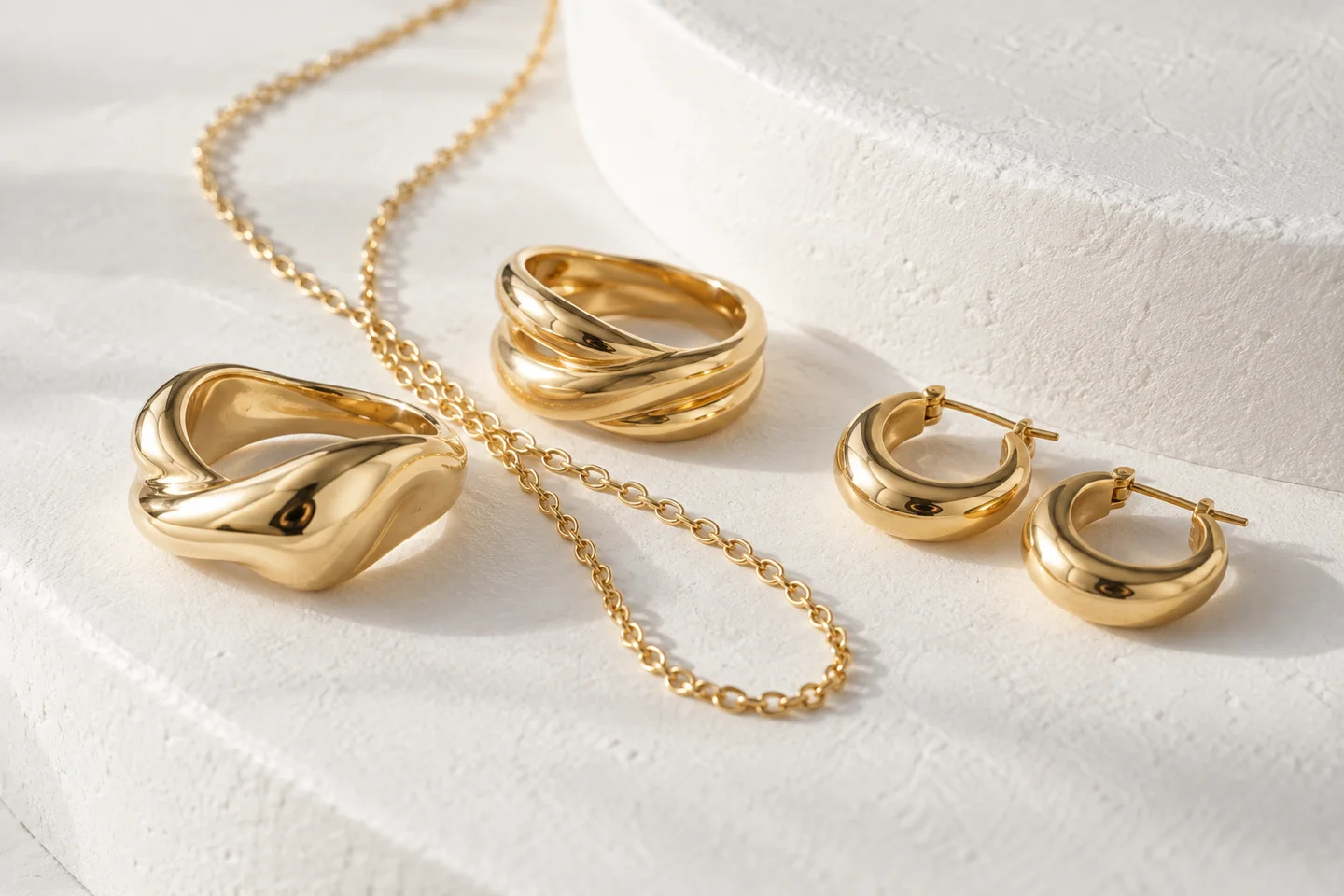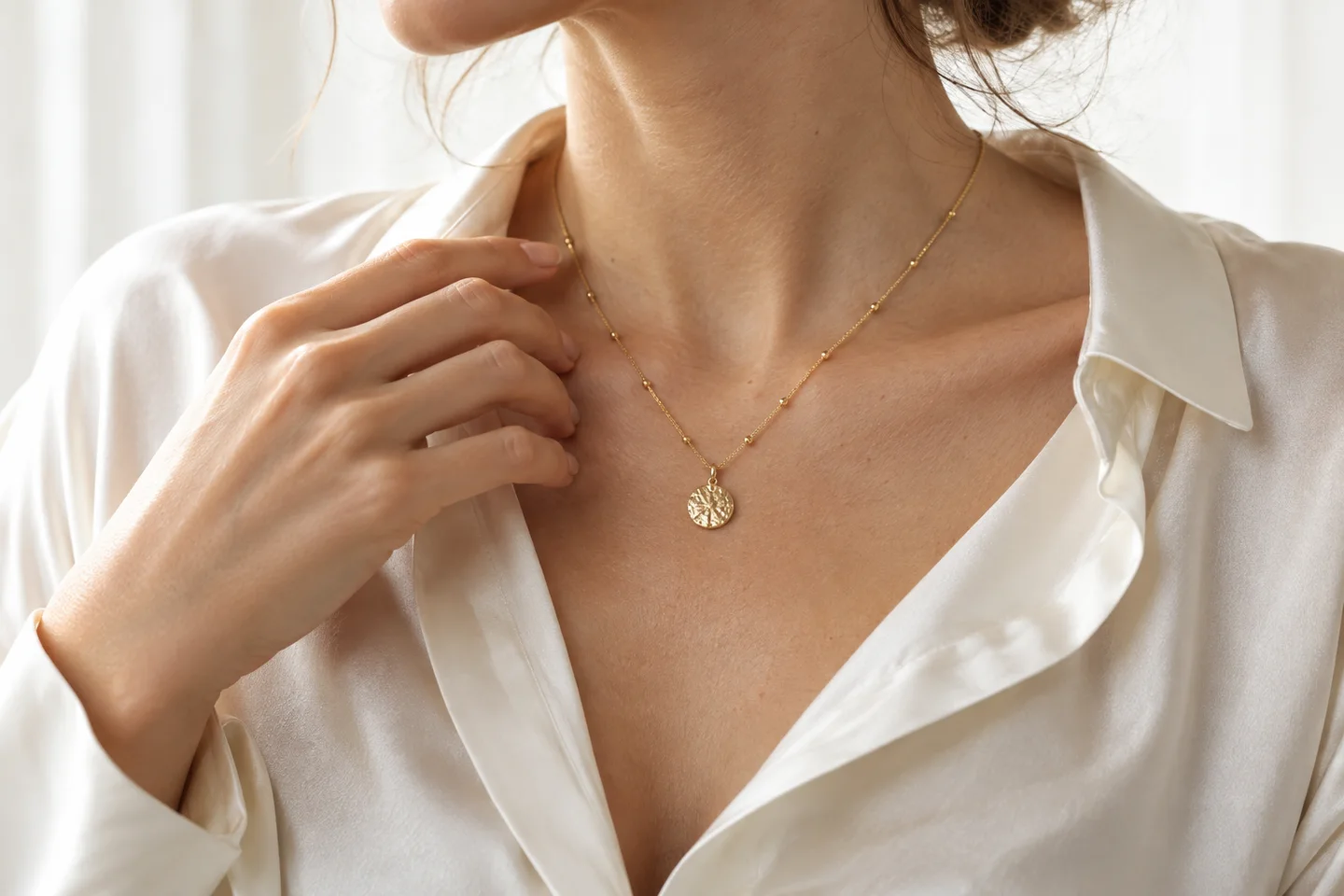
What everyday gold jewellery should do
Everyday gold jewellery works best when it belongs to the life you already lead. A necklace that catches on a work uniform or a ring you remove every ten minutes may be beautiful, but it is unlikely to become your most useful purchase. Start by identifying one gap: earrings for an ordinary workday, a chain that sits well with your favourite shirts, or a ring that feels comfortable on its own.
Gold colour describes an appearance, not the complete construction. Read whether a piece is solid gold, gold vermeil or another gold-plated material. That distinction helps you understand the care routine and ask sensible questions about repair or replating.
Edit the collection you already own
Lay out your current pieces and separate the ones you regularly wear from those you avoid. Note the reason: a difficult clasp, the wrong length, a heavy earring or a shape that competes with clothing. This small exercise creates a personal buying brief. A purchase should solve an actual problem or add a combination you cannot currently make.
Try three outfits with the same necklace and earrings. If the proportions work each time, you have a useful foundation. A favourite pendant or textured ring can supply personality without requiring a different set for every outfit.
Compare fit before comparing price
For necklaces, record full chain length, extender range and pendant dimensions. For hoops, check diameter, thickness, fastening and weight when disclosed. For rings, check size and band width. Product close-ups are poor substitutes for these measurements. Compare new pieces with something you own, using a ruler where helpful.
Comfort includes putting jewellery on and taking it off. A clasp you cannot operate easily can turn a simple morning routine into a chore. Consider trying the design in person when fastening is an important part of your decision.
Build a realistic ownership routine
Decide where you will keep jewellery when removing it for activities specified by the maker. A designated pouch or tray is more useful than relying on memory. Keep the material description and care instructions with your purchase record, especially when several pieces look similar but use different finishes.
An everyday wardrobe can grow slowly. Wear a new addition in several combinations before buying another. The aim is repeat enjoyment and practical versatility, rather than reaching a particular number of gold pieces.